
Best AI Software for Streamlining Business Automation: Top AI Business Automation Tools for Sales and Lead Generation
By Greg Mellott, BadAAAS
This article examines leading artificial intelligence (AI) software for streamlining business automation, with particular emphasis on sales and lead generation. It explains how these tools transform processes, outlines essential features, and provides practical guidance for optimizing sales automation through AI-driven solutions. Many organizations struggle to maintain productivity while managing customer relationships and generating leads. By adopting intelligent automation, organizations can address those challenges and achieve improved operational efficiency. The discussion also covers key features, integration options, and the role of AI in improving workflow management.
What Defines the Best AI Business Automation Tools for Sales and Lead Generation?
Top AI business automation tools for sales and lead generation simplify workflows, improve customer interactions, and increase operational efficiency. These solutions use advanced algorithms to analyze data, predict outcomes, and automate repetitive tasks, raising productivity. Key evaluation metrics include user experience, integration flexibility, and sales-specific functionality. Choosing tools that score well on these criteria is essential for organizations seeking to strengthen lead generation and sales automation.
Key Features of Intelligent Process Automation Software
Intelligent process automation (IPA) software integrates AI and automation to boost business efficiency. Leading AI automation solutions typically include the following features:
- 24/7 Operations: Allowing businesses to function round-the-clock, minimizing delays in response times for customer inquiries.
- Automated Lead Qualification: AI can analyze incoming data to prioritize leads based on engagement and potential.
- Data-Driven Analytics: Leveraging datasets to inform decision-making and optimize marketing strategies.
These capabilities help organizations restructure operational workflows, improving process efficiency and customer satisfaction. For advanced strategies in managing customer journeys, consult the organic lead funnel.
How AI Workflow Automation Platforms Enhance Sales Efficiency

AI workflow automation platforms improve sales efficiency by reducing response times and raising conversion rates. They apply machine learning to historical data to predict customer behavior, enabling sales teams to tailor engagement strategies. Research indicates companies employing AI in sales have seen conversion improvements of up to 30%. Automated, immediate responses to customer queries increase engagement and contribute to higher sales.
Which AI Software Solutions Optimize Lead Generation and Sales Automation?
Certain AI solutions are especially effective for lead generation and sales automation. Chatbots and automated follow-up systems streamline customer interactions and nurture leads through the sales funnel. These tools can assess needs, deliver personalized messaging, and support targeted marketing strategies aligned with audience segments. Customer reports note that organizations deploying such AI tools can achieve up to a 50% increase in qualified leads within the first quarter.
AI-Driven Sales Automation Optimization: Leveraging NLP and Reinforcement Learning
This research paper examines optimisation of sales automation workflows through integration of Artificial Intelligence, with a focus on Natural Language Processing (NLP) and Reinforcement Learning (RL) algorithms. The study identifies inefficiencies in conventional sales processes, such as weaknesses in lead qualification and customer engagement, that impede revenue growth.Optimizing sales automation workflows with AI: Leveraging natural language processing and reinforcement learning algorithms, 2023
How Does AI Software Improve Business Automation Processes?
AI software enhances business automation by increasing operational efficiency, lowering manual workload, and reducing human error. By applying machine learning, organizations can automate time-consuming workflows and reallocate resources to strategic initiatives and customer-facing work. Reported operational efficiency gains reach up to 40%, with attendant reductions in costs tied to repetitive tasks.
The Impact of Artificial Intelligence on Modern Marketing: Reshaping Sales Processes
Artificial intelligence (AI) is positioned to substantially reshape marketing strategies. This research analyses the anticipated role of AI solutions in marketing decision-making across the complete five-stage marketing process.
AI-driven marketing: Transforming sales processes for success in the digital age, KK Sharma, 2023
Automating Operational Workflows with AI-Driven Tools
The adoption of AI-driven tools enables automation of operational workflows such as data entry, reporting, and customer engagement. Systems like automated CRM platforms and predictive analytics execute tasks with greater accuracy while freeing personnel for collaborative work. Benefits include reduced response times, improved lead management, and higher conversion rates. A proactive approach lets organizations continuously refine operational practices. For teams seeking to optimize automated processes and increase efficiency, consider advanced business automation solutions.
The Role of Machine Learning and RPA in Streamlining Sales Pipelines
Machine Learning (ML) and Robotic Process Automation (RPA) help streamline sales pipelines. ML algorithms analyze sales data to reveal customer preferences and behaviors, enabling targeted campaigns. RPA automates repetitive tasks in the sales process, including data entry and follow-ups. Together, these technologies produce time savings and measurable efficiency gains reported by sales teams. Employing AI to enhance sales automation can materially improve performance.
What Are the Integration and Customization Options for AI Business Automation Software?
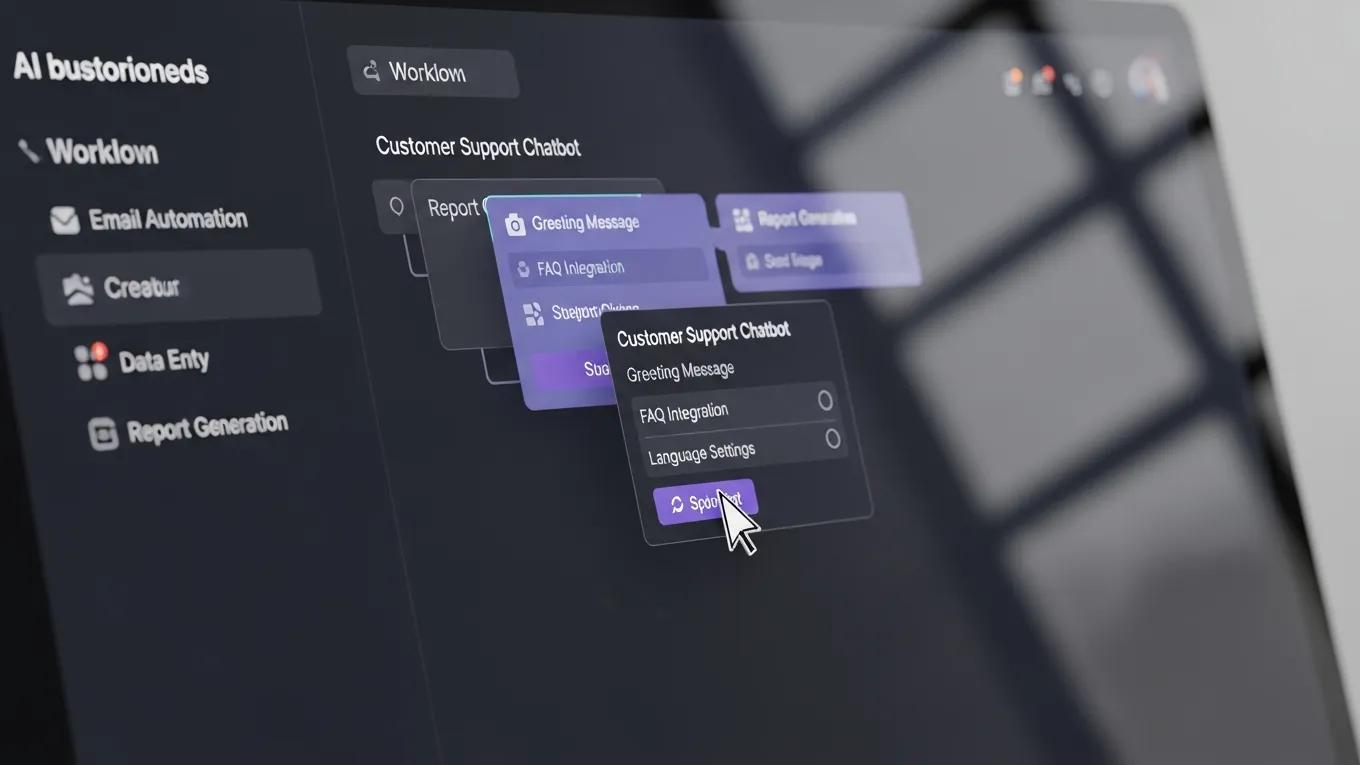
Assessing how AI business automation software integrates with existing systems is essential for organizations expanding their automation capabilities. Seamless integration allows organizations to leverage AI functionality while preserving established infrastructure. In addition, customization options enable alignment with specific operational and industry requirements.
Seamless Integration with Existing Sales and Marketing Systems
AI software commonly integrates with sales and marketing systems via APIs and automation platforms to maintain uninterrupted data flow. This connectivity reduces operational disruption during implementation. Case studies show substantial efficiency improvements when AI tools are integrated with current sales systems.
Customization Capabilities for Industry-Specific Business Automation Use Cases
Customization features are necessary to meet industry-specific requirements. Customization enables organizations to adapt features and workflows to their use cases — for example, financial services require specialised compliance controls, while retail prioritises inventory management. Tailored solutions improve the effectiveness of automation and support responsive operations.
Artificial Intelligence Software for Personalized Marketing Automation: Customer Experience and Sales Implications
The integration of AI software into personalized marketing automation strategies enhances customer experience and supports sales growth.
AI software for personalized marketing automation in SMEs: Enhancing customer experience and sales, WE Kedi, 2024
Different AI business automation tools deliver specific advantages that address distinct operational requirements.