
Category: 9

  • Unlocking Small Business Productivity With AI Tools

    Unlocking Small Business Productivity With AI Tools

    Unlocking Small Business Productivity With AI Automation Software for Lead Generation and Sales

    By Greg Mellott, BadAAAS

    Small businesses face distinct productivity and growth challenges. Advances in artificial intelligence (AI) can deliver measurable gains in efficiency by automating lead generation and sales workflows. This article outlines how AI automation software improves operational capability, agility, and competitiveness.

    This guide summarizes key features, implementation benefits, and practical integration strategies. Readers will learn how AI-powered lead capture, automated follow-ups, and analytics drive data-informed decisions and reduce routine workload.

    Key Features

    AI automation tools offer capabilities that streamline lead generation, automate sales tasks, and integrate with existing systems so teams can reallocate time to higher-value activities.

    AI-Powered Lead Generation
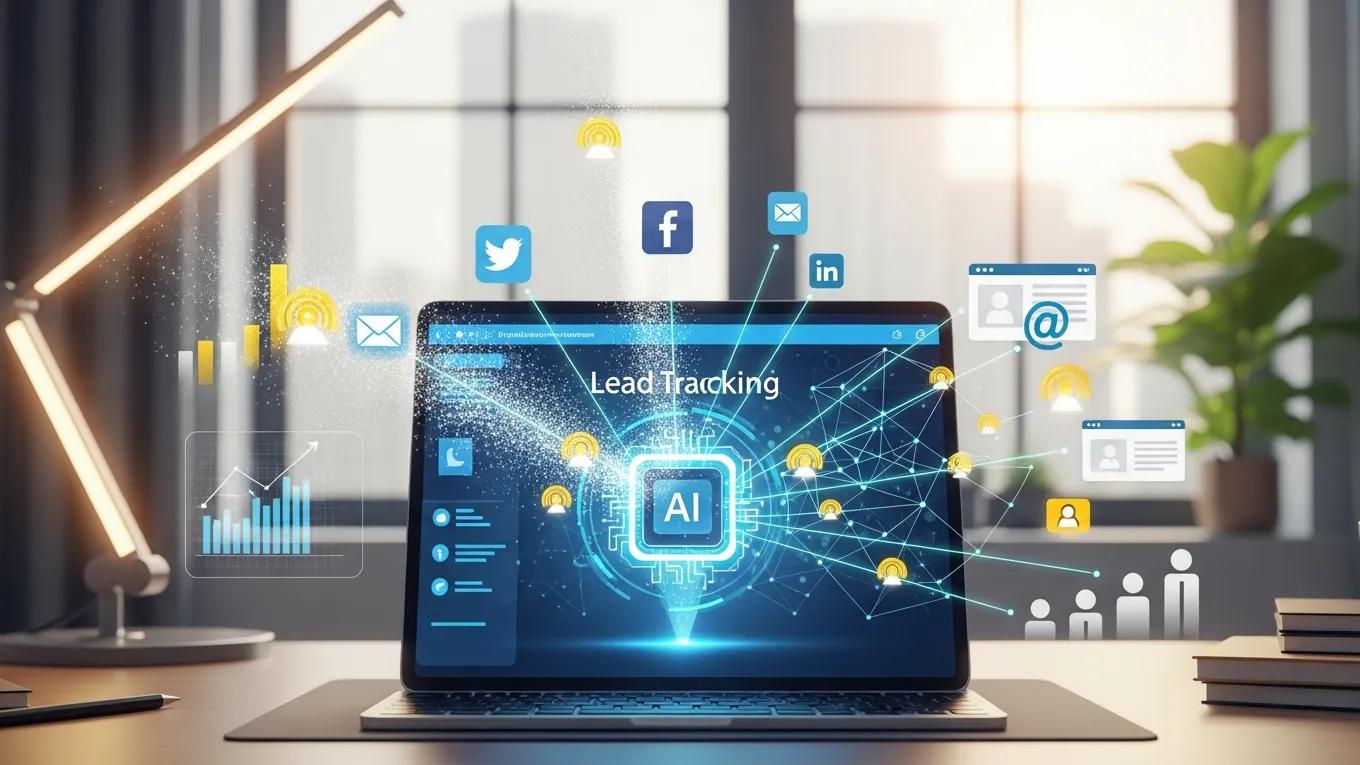
    Visualization of AI-powered lead generation with a digital device capturing leads from various channels

    AI systems capture leads across channels and maintain a consistent pipeline. Algorithms surface prospects that match criteria, while real-time campaign optimization adjusts targeting and messaging to improve conversions.

    AI Sales Agents

    AI sales agents engage prospects continuously, qualify leads, and provide immediate responses. Automating these interactions reduces manual qualification time and provides a consistent customer experience.

    Analytics and Insights

    Analytics integration lets businesses analyze interactions and performance to identify trends, inform strategy, and prioritize actions that improve sales and marketing outcomes.

    Automated Follow-Ups

    Professional using an AI tool for automated follow-up communications in an office setting

    Automated follow-ups nurture leads through the funnel with timely messages that reduce attrition. This minimizes routine work for sales teams so they can focus on complex relationships and closing deals.

    Integration with Existing Systems

    Connecting AI tools to CRMs and other systems enables seamless handoffs and centralized data, improving process flow and maximizing current infrastructure investments.

    Benefits

    AI automation delivers increased efficiency, higher conversion rates, and cost savings for small businesses.

    1. Increased Efficiency: Automates repetitive tasks so employees can focus on strategic work.
    2. Higher Conversion Rates: Better targeting and nurturing increase lead-to-sale conversion.
    3. Cost Savings and Scalability: Reduces labor for routine tasks and scales operations without proportional headcount increases.

    For some businesses, AI-driven solutions such as those offered by BadAAAS can accelerate adoption. The company’s focus on streamlining lead generation and sales workflows helps small businesses compete more effectively.

    Effective Implementation Strategies

    Successful AI adoption follows a clear plan: define objectives, choose tools that fit your needs, train staff, monitor performance, and tap professional networks for support.

    Define Clear Objectives

    Set specific objectives and KPIs to ensure tools align with business goals and to measure success accurately.

    Choose the Right Tools

    Select AI solutions that match the organization’s size and requirements, and verify compatibility with existing systems before committing.

    Training and Onboarding

    Provide structured onboarding, documentation, and hands-on training so users adopt tools confidently and effectively.

    Monitor and Optimize

    Track performance metrics regularly, use analytics to spot issues, and iterate on workflows to maintain gains.

    Engage with a Community

    Participation in industry networks speeds learning and exposes teams to practical ideas that improve implementation and innovation.

    How Does AI Automation Enhance Small Business Productivity?

    AI automation reduces manual work, shortens process cycles, and saves time. By automating routine tasks and optimizing lead management with real-time data, businesses can focus on strategic priorities and customer relationships.

    What Are Key Benefits of AI Automation for Small Businesses?

    The primary benefits include:

    1. 24/7 Operations: Continuous engagement ensures leads are captured across time zones.
    2. Increased Efficiency: Automation shortens lengthy processes and boosts output.
    3. Cost Reduction: Lower operational costs free resources for strategic use.

    Which AI Solutions Streamline Lead Generation and Sales Workflows?

    AI sales agents, automated follow-up systems, and integrated lead-tracking tools keep leads moving through the purchasing journey and simplify sales operations.

    What Are Effective AI Sales Automation Tools for SMBs?

    Commonly adopted tools include:

    1. AI-Powered CRM Systems: Centralize customer data and automate communications.
    2. Lead Scoring Tools: Rank leads by conversion likelihood.
    3. Automated Email Marketing: Delivers timely, relevant messages to nurture prospects.

    These tools organize pipelines, increase sales-team efficiency, and improve customer experience.

    How Do AI Sales Tools Improve Conversion Efficiency?

    By qualifying and nurturing leads automatically and using data-driven insights to refine outreach, AI tools speed progression through the funnel and reduce missed opportunities.

    Which Features Differentiate the Best Productivity AI for Small Businesses?

    Top solutions share key features:

    1. Seamless Integration: Works with existing systems to minimize disruption.
    2. Advanced Analytics Capabilities: Provides actionable insights for decision-making.
    3. Customizable Workflows: Lets teams tailor automation to their processes.

    These features support growth and make AI practical for small businesses.

    How Can Small Businesses Implement AI-Powered Lead Generation Funnels?

    Key steps include:

    1. Identify Target Audiences: Define segments most likely to convert.
    2. Set Up Lead Capture Mechanisms: Use AI to gather leads from multiple channels.
    3. Utilize Data for Continuous Optimization: Refine funnels using performance data and feedback.

    Following these steps builds a repeatable, optimizable process for nurturing leads.

    What Are Steps to Automate Organic Lead Funnel Processes?

    To automate organic funnels:

    1. Develop Customer Personas: Tailor messaging to audience needs.
    2. Create Engaging Content: Drive traffic and attract leads.
    3. Use Automation Tools for Follow-Up: Deploy automated messaging to engage prospects.

    These practices streamline conversion from organic channels. Learn more about automating organic lead funnel processes.

    How Do AI Lead Generation Tools Integrate With CRM Systems?

    Integration centralizes lead data, improves handoffs, and enhances reporting so teams can act on unified insights and refine future strategies.

    What Are Emerging Trends in AI Tools for Small Business Productivity?

    Trends include greater personalization and broader automation driven by advances in machine learning and natural language processing, producing more responsive customer interactions.

    How Is SMB AI Automation Adoption Evolving in 2024-2026?

    Adoption among small and medium businesses is growing from 2024 to 2026 as organizations recognize AI’s productivity benefits and integrate automation into routine operations to stay competitive.

    Which Future AI Innovations Will Impact Small Business Scalability?

    Future innovations such as improved predictive analytics and expanded automation features are expected to deepen customer insights and support scalable growth strategies.


  • Best AI Software for Streamlining Business Automation

    Best AI Software for Streamlining Business Automation

    Best AI Software for Streamlining Business Automation: Top AI Business Automation Tools for Sales and Lead Generation

    By Greg Mellott, BadAAAS

    This article examines leading artificial intelligence (AI) software for streamlining business automation, with particular emphasis on sales and lead generation. It explains how these tools transform processes, outlines essential features, and provides practical guidance for optimizing sales automation through AI-driven solutions. Many organizations struggle to maintain productivity while managing customer relationships and generating leads. By adopting intelligent automation, organizations can address those challenges and achieve improved operational efficiency. The discussion also covers key features, integration options, and the role of AI in improving workflow management.

    What Defines the Best AI Business Automation Tools for Sales and Lead Generation?

    Top AI business automation tools for sales and lead generation simplify workflows, improve customer interactions, and increase operational efficiency. These solutions use advanced algorithms to analyze data, predict outcomes, and automate repetitive tasks, raising productivity. Key evaluation metrics include user experience, integration flexibility, and sales-specific functionality. Choosing tools that score well on these criteria is essential for organizations seeking to strengthen lead generation and sales automation.

    Key Features of Intelligent Process Automation Software

    Intelligent process automation (IPA) software integrates AI and automation to boost business efficiency. Leading AI automation solutions typically include the following features:

    1. 24/7 Operations: Allowing businesses to function round-the-clock, minimizing delays in response times for customer inquiries.
    2. Automated Lead Qualification: AI can analyze incoming data to prioritize leads based on engagement and potential.
    3. Data-Driven Analytics: Leveraging datasets to inform decision-making and optimize marketing strategies.

    These capabilities help organizations restructure operational workflows, improving process efficiency and customer satisfaction. For advanced strategies in managing customer journeys, consult the organic lead funnel.

    How AI Workflow Automation Platforms Enhance Sales Efficiency

    Sales team discussing strategies while utilizing AI analytics to enhance efficiency

    AI workflow automation platforms improve sales efficiency by reducing response times and raising conversion rates. They apply machine learning to historical data to predict customer behavior, enabling sales teams to tailor engagement strategies. Research indicates companies employing AI in sales have seen conversion improvements of up to 30%. Automated, immediate responses to customer queries increase engagement and contribute to higher sales.

    Which AI Software Solutions Optimize Lead Generation and Sales Automation?

    Certain AI solutions are especially effective for lead generation and sales automation. Chatbots and automated follow-up systems streamline customer interactions and nurture leads through the sales funnel. These tools can assess needs, deliver personalized messaging, and support targeted marketing strategies aligned with audience segments. Customer reports note that organizations deploying such AI tools can achieve up to a 50% increase in qualified leads within the first quarter.

    AI-Driven Sales Automation Optimization: Leveraging NLP and Reinforcement Learning

    This research paper examines optimisation of sales automation workflows through integration of Artificial Intelligence, with a focus on Natural Language Processing (NLP) and Reinforcement Learning (RL) algorithms. The study identifies inefficiencies in conventional sales processes, such as weaknesses in lead qualification and customer engagement, that impede revenue growth.Optimizing sales automation workflows with AI: Leveraging natural language processing and reinforcement learning algorithms, 2023

    How Does AI Software Improve Business Automation Processes?

    AI software enhances business automation by increasing operational efficiency, lowering manual workload, and reducing human error. By applying machine learning, organizations can automate time-consuming workflows and reallocate resources to strategic initiatives and customer-facing work. Reported operational efficiency gains reach up to 40%, with attendant reductions in costs tied to repetitive tasks.

    The Impact of Artificial Intelligence on Modern Marketing: Reshaping Sales Processes

    Artificial intelligence (AI) is positioned to substantially reshape marketing strategies. This research analyses the anticipated role of AI solutions in marketing decision-making across the complete five-stage marketing process.

    AI-driven marketing: Transforming sales processes for success in the digital age, KK Sharma, 2023

    Automating Operational Workflows with AI-Driven Tools

    The adoption of AI-driven tools enables automation of operational workflows such as data entry, reporting, and customer engagement. Systems like automated CRM platforms and predictive analytics execute tasks with greater accuracy while freeing personnel for collaborative work. Benefits include reduced response times, improved lead management, and higher conversion rates. A proactive approach lets organizations continuously refine operational practices. For teams seeking to optimize automated processes and increase efficiency, consider advanced business automation solutions.

    The Role of Machine Learning and RPA in Streamlining Sales Pipelines

    Machine Learning (ML) and Robotic Process Automation (RPA) help streamline sales pipelines. ML algorithms analyze sales data to reveal customer preferences and behaviors, enabling targeted campaigns. RPA automates repetitive tasks in the sales process, including data entry and follow-ups. Together, these technologies produce time savings and measurable efficiency gains reported by sales teams. Employing AI to enhance sales automation can materially improve performance.

    What Are the Integration and Customization Options for AI Business Automation Software?

    Professional customizing an AI business automation tool on a computer screen

    Assessing how AI business automation software integrates with existing systems is essential for organizations expanding their automation capabilities. Seamless integration allows organizations to leverage AI functionality while preserving established infrastructure. In addition, customization options enable alignment with specific operational and industry requirements.

    Seamless Integration with Existing Sales and Marketing Systems

    AI software commonly integrates with sales and marketing systems via APIs and automation platforms to maintain uninterrupted data flow. This connectivity reduces operational disruption during implementation. Case studies show substantial efficiency improvements when AI tools are integrated with current sales systems.

    Customization Capabilities for Industry-Specific Business Automation Use Cases

    Customization features are necessary to meet industry-specific requirements. Customization enables organizations to adapt features and workflows to their use cases — for example, financial services require specialised compliance controls, while retail prioritises inventory management. Tailored solutions improve the effectiveness of automation and support responsive operations.

    Artificial Intelligence Software for Personalized Marketing Automation: Customer Experience and Sales Implications

    The integration of AI software into personalized marketing automation strategies enhances customer experience and supports sales growth.

    AI software for personalized marketing automation in SMEs: Enhancing customer experience and sales, WE Kedi, 2024

    Different AI business automation tools deliver specific advantages that address distinct operational requirements.

    Tool TypeKey FeatureBenefit
    CRM SolutionsAutomated Lead ManagementEnhances lead tracking and customer engagement
    Workflow PlatformsIntegration with Other ToolsEnsures seamless information flow and minimizes disruption
    Analytics SoftwarePredictive Data AnalyticsProvides insights to optimize marketing campaigns